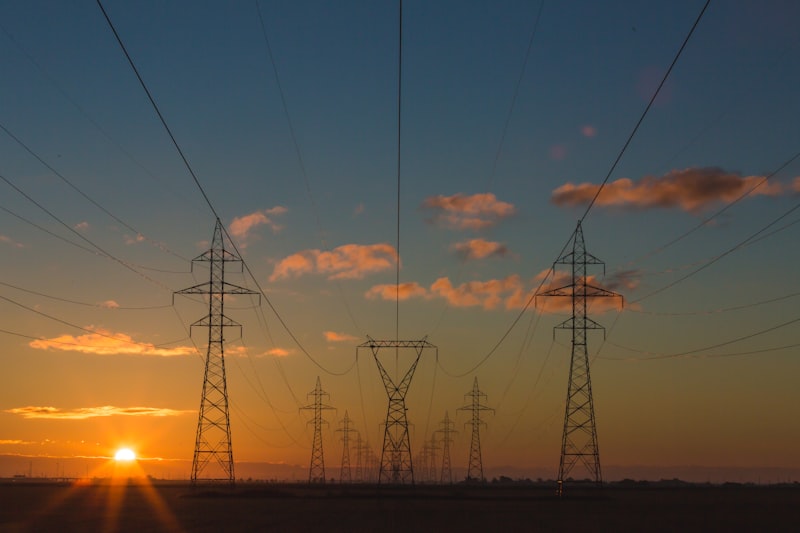
FAIR-ARCHRIQ structures the path from a defined threat event to a decision-ready economic view: affected assets and dependencies, loss frequency and magnitude, control conditions, uncertainty, and treatment choices.
ITology turns technical depth into practical value for every level of the operating model: leadership, assets, operations, risk, OT/IT, engineering, and data teams.
Compare loss exposure, treatment cost, avoided disruption, and operating value before a decision is made.
Connect cyber-physical scenarios to the assets, processes, and decisions that keep energy moving.
Use models, monitoring, and decision intelligence to expose avoidable loss, rework, delay, and resource leakage.
Strengthen technical discipline, data confidence, and management speed across complex energy portfolios.
Give leaders better visibility into operational conditions, integrity priorities, and the consequences of delayed action.
Apply AI and analytics where they improve engineering judgment, workforce capability, and alignment with energy-development priorities.
ITology meets each team where its decision is made, then connects the evidence across the organization so technical work translates into business outcomes.
A decision brief that links production continuity, risk appetite, cost, sustainability, and investment priorities across the portfolio.
Asset context, dependency visibility, and scenario analysis that help teams reduce disruption, waste, and avoidable operating cost.
Threat scenarios, control conditions, loss distributions, uncertainty, and prioritized actions that can stand up to review.
Models, monitoring, analytics, and AI-enabled workflows that help specialists work faster and transfer knowledge across the organization.
Hormuz is a visible reminder that energy resilience is not only a shipping question. It is a connected decision across maritime trade, pipelines, land transport, ports, terminals, storage, suppliers, insurance, OT/IT, and production commitments.
Sea lanes, pipelines, ports, roads, rail, storage, terminals, and digital controls appear stable — while concentration risk and unused alternatives remain hidden.
Rerouting changes lead times, capacity, insurance exposure, storage needs, port constraints, operating cost, and the consequences of delayed supply.
Map dependencies, test multimodal alternatives, quantify loss and recovery, and prioritize actions across sea, land, pipeline, asset, and OT/IT layers.
ITology helps energy organizations use practical frameworks as operating disciplines: maintaining security measures, shaping an energy-fit architecture, improving data interoperability, and turning governance into measurable performance.
Establish, maintain, test, and improve governance measures so security remains part of daily operations rather than a one-time assessment.
Align business, data, applications, technology, OT, and infrastructure decisions through an Enterprise Architecture approach suited to energy operations.
Apply DAMA-informed data governance and OGC/ISO-aligned information practices to improve quality, lineage, exchange, and trusted reuse.
Use EFQM-aligned thinking to connect leadership, people, processes, innovation, stakeholder value, and results without treating excellence as a certificate alone.
We translate reservoir context, operational performance, OT/IT dependencies, and governance requirements into financial exposure, treatment economics, efficiency opportunities, and decisions leaders can defend.
Assess control environments, document evidence, align stakeholders, and turn governance requirements into practical action plans.
Connect enterprise architecture, IT/OT dependencies, data ownership, infrastructure, and industrial assets into one operating view.
Combine FAIR/CRQ analysis, KPI/KRI intelligence, gap analysis, and treatment economics to focus investment where it matters most.
From geoscience, drilling, and reservoir studies to cyber-risk economics, ITology combines energy-domain expertise with practical data and digital tools that help leaders protect value, reduce waste, and direct decisions with greater confidence.
Convert reservoir performance, production constraints, and operating signals into priorities that protect value and improve the return on existing assets.
Connect well objectives, subsurface uncertainty, geotechnical and geophysical evidence, execution risk, cost, safety, and delivery performance from plan to production.
Map and assess the movement of hydrocarbons and critical materials across maritime routes, pipelines, roads, rail, ports, terminals, storage, and suppliers.
Compare route availability, capacity, lead time, insurance exposure, cost, and operational consequences before a chokepoint or infrastructure failure forces a response.
Test field behavior, uncertainty, production choices, and development scenarios before they become expensive operating or capital decisions.
Connect subsurface evidence, development options, production targets, facilities, and investment choices in one decision narrative for asset leadership.
Improve recovery and injection performance while reducing avoidable losses, energy waste, operating friction, and uncertainty in the plan.
Connect asset models, digital monitoring, data pathways, and AI-enabled analytics so leaders can see performance, dependencies, waste, and emerging exposure.
Translate engineering evidence into priorities that operators, owners, finance leaders, and boards can sponsor, measure, and defend.
Connect wells, fields, facilities, pipelines, concessions, ports, terminals, transport corridors, risk zones, and field activity so location supports the operating decision.
Extend existing investments with interoperable data pathways and governed, locally suitable AI workflows that teams can use in context.
Quantify spatial variability, subsurface uncertainty, and confidence so reservoir and development decisions are based on ranges rather than false precision.
Bring geotechnical, geomechanical, integrity, and operating constraints into development planning, field performance, and risk decisions.
Connect seismic, well, geological, petrophysical, and reservoir evidence into a consistent view for characterization and scenario planning.
Organize, quality-check, integrate, and analyze large volumes of spatial, subsurface, operational, and risk data for AI-ready decisions.
Maintain policies, control measures, risk registers, evidence, testing, and improvement actions across the operating environment.
Design and govern the relationships between business capabilities, data, applications, IT/OT, infrastructure, and asset operations.
Improve ownership, quality, lineage, metadata, exchange, and interoperability using DAMA-informed and OGC/ISO-aligned practices.
Connect governance, people, process, innovation, stakeholder value, and results through an EFQM-aligned improvement approach.
Quantitative risk intelligence that connects threat scenarios, technical exposure, IT/OT dependencies, loss distributions, and the economics of treatment.
Connected models and data pathways that bring reservoir, production, infrastructure, and operational context into one reviewable asset and investment view.
Decision dashboards and monitoring workflows for performance conditions that should trigger management attention.
Executive-ready KPI/KRI, risk, cost, and performance views that help leaders compare scenarios, treatment options, residual exposure, and capital priorities.
Map and analyze wells, facilities, pipelines, terminals, ports, transport corridors, operational dependencies, integrity priorities, and response context for energy operations.
Integration patterns and governed AI use cases that improve the value of current platforms, data, and workforce knowledge before new spend is introduced.
A scoped solution for integrating geoscience data, quality controls, spatial variability, uncertainty ranges, and scenario outputs into reviewable decisions.
A practical data foundation that connects existing systems and enables localized analytics, knowledge workflows, and AI use cases within organizational controls.
A practical view of policies, controls, evidence, measures, exceptions, risk treatment, and continuous improvement across the organization.
A reviewable blueprint connecting capabilities, processes, data, applications, technology, OT, and infrastructure to the asset strategy.
A scoped solution for connecting well planning, geological and geophysical inputs, drilling performance, cost, integrity, risk, and handover to production.
A scenario workspace for comparing maritime, pipeline, road, rail, port, terminal, storage, and supplier dependencies before and after a route disruption.
Our first wedge is Oil & Gas: operators, asset teams, finance leaders, insurers, and critical suppliers working across interconnected, high-consequence environments.
A repeatable FAIR-led workflow from stakeholder alignment to probability-weighted investment choices.
Connect well objectives, subsurface evidence, execution constraints, cost, safety, integrity, and handover decisions across the well lifecycle.
Build structured assessment evidence, compliance visibility, and action planning around critical energy assets.
Map systems, dependencies, data ownership, and control environments so operational blind spots become visible.
Transform KPI and KRI signals into management views that reveal maturity, gaps, trends, and emerging priorities.
Combine risk quantification, geospatial context, industrial gap analysis, and treatment economics for high-consequence operations.
Our Dubai office is a dedicated practice for organizations that need to move faster on artificial intelligence, harden their security posture, and turn data into a real operating advantage.
Roadmaps, use-case prioritization, and governance so AI investment lands on measurable business outcomes.
Custom ML models and workflow automation that reduce manual effort and scale with your operation.
Threat assessments, penetration testing, and continuous monitoring built around real attacker behavior.
Zero-trust architecture, policy frameworks, and compliance programs designed around how your teams actually work.
Pipelines, warehousing, and integration that connect fragmented systems into a single reliable source of truth.
Dashboards and reporting that turn raw numbers into decisions your teams can act on immediately.
Deep domain expertise across the industries shaping the UAE's digital economy.
Secure platforms, compliance frameworks, and fintech integrations.
Digital health systems and patient data management solutions.
PropTech platforms, smart building systems, and project tools.
Omnichannel platforms, ERP integration, and CX optimization.
Supply chain digitalization, IoT integration, and automation.
Learning management systems and digital campus infrastructure.
Smart grid tech, asset management, and operational analytics.
e-Government solutions and smart city infrastructure platforms.
We translate cyber and operational risk into numbers leadership can act on — from national infrastructure programs to board-level investment decisions.
Comprehensive frameworks for national resilience, critical infrastructure protection, and cross-sector governance alignment.
Cyber Risk Quantification, emergency preparedness, and crisis management consulting for enterprise and government.
Digital transformation roadmaps, data governance (DAMA Framework), and organizational resilience design.
Translating technical security risks into clear financial terms for board-level decision-making and insurance readiness.
ITology was founded by Eng. Omar Hilal Saeed Alzaabi, a UAE national and former Oil & Gas leader whose career across ADNOC Onshore spans reservoir management, reservoir simulation, technical studies, and efficiency experience.
That experience shapes how we build: grounded in the asset, fluent in the operation, and focused on translating technical uncertainty into financial clarity for business, risk, and investment leaders.
Meet the founder →The leadership driving ITology's energy, governance, and technology practice across Abu Dhabi and Dubai.
Visionary energy industry technical expert and reservoir engineering SME with 22+ years of exemplary performance at ADNOC Onshore, specializing in reservoir surveillance, numerical simulation, integrated development planning, and digital asset transformation.
Proven track record optimizing mega-scale mature and greenfield onshore assets, aligning reservoir development strategies with major production capacity milestones, and deploying advanced AI-driven monitoring systems.
As Founder of ITology, he bridges decades of deep operational domain expertise with next-generation technology to empower energy transition and operational efficiency across Abu Dhabi's oil, gas, and renewable energy sectors.
Globally recognized executive in governance, enterprise risk management, cybersecurity, and digital transformation, with 30+ years of leadership experience building resilient organizations across government, critical infrastructure, and private-sector enterprises.
As CEO of OSC4i and CTO of ITology, Mohamed leads governance strategies that strengthen organizational resilience, reinforce executive decision-making, and align corporate objectives with governance, enterprise risk management, and operational excellence.
He has advised senior government leaders, boards, and executive teams on governance transformation, enterprise risk management, and cybersecurity — including supporting development of the Jordanian National Cybersecurity Framework and leading enterprise transformation initiatives across the UAE.
Partnerships that extend our reach across research, technology, and delivery in Abu Dhabi and Dubai.
Joint research and development collaboration supporting our technical practice across both offices.
Technology partnership supporting platform and delivery capability across our energy and digital practices.
Tell us where an operational, cyber, environmental, efficiency, or capital decision is difficult to compare. We will start with the asset, the scenario, and the evidence — not a product pitch.